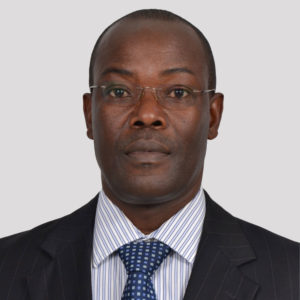
Isaac Nyamongo
Co-Chair WAU Steering Committee
IUAES President
Isaac K. Nyamongo is a Professor of Anthropology. He currently serves as the Deputy Vice Chancellor (Cooperative Development, Research and Innovation) at the Cooperative University of Kenya. He holds a PhD from the University of Florida, USA and has over 30 years in teaching, research, and consultancy. He has supervised and mentored more than 40 students both at Doctoral and Masters levels. Prof. Nyamongo has held research and training grants from many organizations including the European Union, World Health Organization, International Development Research Center, Wenner Gren Foundation and Toyota Foundation among others. His research and training experience spans several countries within the Africa region including Kenya, Uganda, Mozambique, Tanzania, Zambia, South Sudan, Somalia, Ethiopia and Eritrea and has focused mainly on social drivers of the human condition and development. Prof. Nyamongo has more than 60 peer-reviewed publications in scientific journals. In addition, he has published books and book chapters. Further, he has held visiting Professor positions in the US as a Fulbright Scholar (2009-2010) and in South Africa where he was a Carnegie Mellon Fellow (2012). He is a past Treasurer and President of the PanAfrican Anthropological Association and the recipient of the 2022 Pelto International Award from the Society for Applied Anthropology (SfAA), USA, and 2022 International Cooperative Champion Award from the US Overseas Cooperative Council (US OCDC). For his exemplary service, he was decorated with the Moran of the Burning Spear by the President of Kenya.

Clara Saraiva
Co-Chair WAU Steering Committee
WCAA, Deputy Chair WCAA
Institute of Social Sciences- University of Lisbon (ICS-UL)
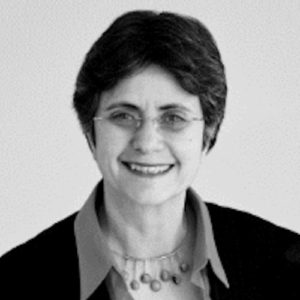
Virginia R. Dominguez
WAU Committee member
IUAES Secretary-General
Virginia R. Dominguez (B.A., MPhil, and Ph.D. Yale) is the Edward William and Jane Marr Gutgsell Professor of Anthropology (and member of the Jewish Studies, Middle Eastern Studies, and Caribbean Studies faculty) at the University of Illinois at Urbana-Champaign. She is also co-Founder and consulting director of the International Forum for U.S. Studies (established in 1995) and co-editor of its book series, Global Studies of the United States. A political and legal anthropologist, she was president of the American Anthropological Association from 2009 to 2011, editor of American Ethnologist from 2002 to 2007, and president of the AAA’s Society for Cultural Anthropology from 1999 to 2001. In 2013 she helped the World Council of Anthropological Associations establish the Brazil-based Antropologos sem fronteiras (Anthropologists without Borders). Author, co-author, editor, and co-editor of multiple books, she is perhaps best known for her work on the Caribbean, the U.S., and Israel (especially in The Caribbean and Its Implications for the United States, White by Definition: Social Classification in Creole Louisiana, and People as Subject, People as Object: Selfhood and Peoplehood in Contemporary Israel). Her most recent books are America Observed: On an International Anthropology of the United States (coedited with Jasmin Habib), Global Perspectives on the U.S. (coedited with Jane Desmond) and Anthropological Lives: An Introduction to the Profession of Anthropology (coauthored with Brigittine French). Prior to joining the University of Illinois faculty in 2007, she taught at Duke, the Hebrew University of Jerusalem, the University of California at Santa Cruz, the University of Iowa, and Eotvos Lorand University in Budapest. She has also been Directrice d’Etudes at the Ecole des Hautes Etudes en Sciences Sociales) in Paris, a Simon Professor at the University of Manchester in England, a Mellon Fellow at the University of CapeTown in South Africa, a Morgan Lecturer at the University of Rochester in the U.S., a research fellow at the East-West Center in Honolulu, Hawai’i, and a Junior Fellow at Harvard. Internationally, she serves on the World Anthropological Union’s Steering Committee, the World Council of Anthropological Associations’ Organising Committee, and the International Science Council’s Finance and Fundraising Committee.
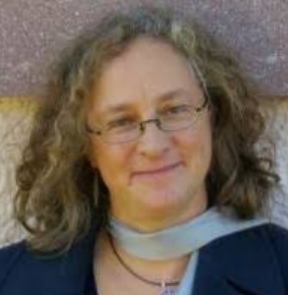
Francesca Declich
WAU Committee member
WCAA Deputy Chair
Francesca Declich (PhD) is affiliated with three Italian anthropological associations (SIAC, ANPIA, and SIAA) and served as a member of ANPIA’s Arbitrator’s Council for six years. She has been the International Liaison of the AfAA (AAA section) since 2015 and previously served as European Rapporteur for the Tanzanian Studies section of the ASA African Studies Association (US).
Following extensive fieldwork in Somalia, Tanzania, and Mozambique, she co-founded the Italian Association for African Studies (ASAI) in 2011 and was elected its President in 2021. In that role, she organized major international conferences in Urbino (2022) and Messina (2024), fostering interdisciplinary dialogue among anthropologists, historians, and linguists. Since 2021, she has served on the Organizing Committee (OC) of the WCAA, endorsed by SIAC. She has also edited three video documentaries and worked in applied anthropology in a number of countries in Latin America and Africa.
She has written widely in international peer reviewed journals and the results of her research work on several topics (enslavement, enfranchisement and abolition in Mozambique and Somalia, women and Islam in East Africa, Indian Ocean and Swahili networks) appears in renowned publishers like Cambridge University Press, Oxford University Press, Brill, James and Currey.

Edward Liebow
WAU Committee member
Edward Liebow served as Executive Director of the American Anthropological Association from 2012-2023. Before being named AAA director, Ed enjoyed a long career with the non-profit Battelle Memorial Institute, where he was director of the Centers for Public Health Research and Evaluation and for 27 years conducted research on a variety of environmental, public health, and social policy issues. He received his PhD from Arizona State University, and maintains affiliations with the University of Washington and the Smithsonian Center for Folklife and Cultural Heritage. He was a Senior Fellow of the Fulbright Commission, and was elected a Fellow of the American Association for the Advancement of Science, the Royal Anthropological Institute, and the Society for Applied Anthropology. In addition to the WAU Steering Committee, he has served on the boards of the National Humanities Alliance, the Consortium of Social Science Associations, the Society for Applied Anthropology, the American Anthropological Association, the National Institute of Social Sciences, and the Burroughs-Wellcome Foundation.

Felipe Fernandes
WAU Committee member
IUAES Head of Council on Commissions

Miriam Grossi
WAU Committee member
IUAES Vice President
I am Brazilian, an anthropologist trained in Brazil at UFRGS – Universidade Federal do Rio Grande do Sul, and in France at the Université de Paris V, where I obtained my doctorate in 1988. In 1989, I joined as a professor at the Federal University of Santa Catarina (UFSC), where I built my career in teaching and research in the fields of gender studies, methodology, and history of anthropology, supervising undergraduate and postgraduate research for over 200 students. In addition to my affiliation with UFSC, I have been a visiting professor at various other Brazilian universities and in France (Ecole des Hautes Etudes en Sciences Sociales, Université de Paris 3), the United States (Columbia University), Portugal (ISCTE), and Chile (Universidad de Chile).
My connection with the current IUAES began in 1993 when I participated in the IUAES Congress (then ICAES) in Mexico City. Being at the beginning of my anthropological career, being able to meet the global anthropological community was incredibly captivating. In 1998, although I had papers accepted for presentation at the Williamsburg Congress, I was unable to attend due to high costs and difficulties in obtaining a visa to the United States. Since 2004, when WCAA was created at the congress of the Brazilian Anthropological Association held in Recife, where I was elected and assumed my mandate as president of the Brazilian Association, I have been following the articulations of global anthropological associations and have been attending the IUAES congresses again, such as the one in Kunming, China, in 2009. At this congress, along with other Brazilian and Latin American colleagues, we initiated the project of organizing an IUAES congress in Brazil. As there was already a strong candidacy from Manchester for the 2013 Congress, we proposed to submit our candidacy for the following congress, which finally took place in 2018 in Florianópolis under my general coordination.
Between 2013 and 2018, I served on the IUAES board as vice president responsible for organizing the 18th Congress in Florianópolis. This gave me the ppportunity to understand how our association works and closely follow the main challenges faced by the IUAES at that time. During the five years I was part of the board, under the presidency of Faye Harrisson and with Junji Koysumi as secretary general, our main challenges included: a) global integration of anthropologists from all continents into the association. We organized inter-congresses on all continents (Japan in 2014, Thailand in 2015, Croatia in 2016, Canada in 2017), culminating in the congress in Brazil. b) coordination between the two global anthropological associations – IUAES and WCAA within WAU; c) revitalization of the association through thematic commissions, which allowed the integration of anthropologists from new generations, enabling significant renewal of the IUAES.
I stepped away from the IUAES during the 2018-2023 term because I became involved in important Brazilian scientific associations. I served as president of ANPOCS, the main association that brings together anthropology, sociology, and political science in Brazil, for the 2019/2020 biennium. I was elected as a representative of the scientific community in the humanities for the CNPq Deliberative Council (2020/2024), as well as a member of the board of SBPC – Brazilian Society for the Advancement of Science, an association that encompasses scientific associations from all fields of knowledge and has a strong impact on science and technology policy in Brazil.
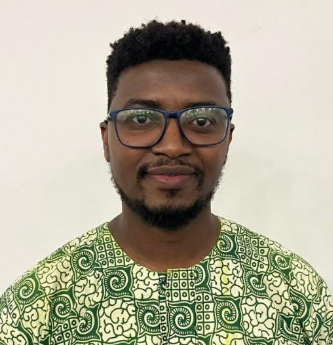
Gabriel Darong
WAU Committee member
WCAA Organizing Committee
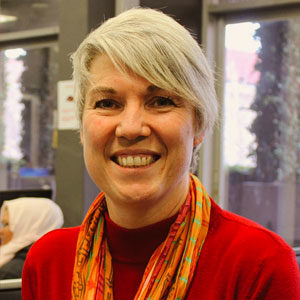
Helen Macdonald
WAU Committee member
Helen Macdonald is Associate Professor at the University of Cape Town. A social anthropologist with a BA, BCom and MA from the University of Otago in her native New Zealand, and a PhD from the School of Oriental and African Studies, London. Drawing on 25 years of research, she recently published with Routledge Witch Accusations from Central India: The Fragmented Urn. This book positions witchcraft in light of current dialogues around modernity, post colonialism, violence and where alternative beliefs to those imagined as rational can and should be engaged, yet extends the conversation beyond the African continent where very little attention has been focused. For the last decade she has led a research project entitled The Social Markers of TB that has worked with ethnographic research methods to understand TB infected persons, their families, care providers, and social networks. This international Medical Humanities project in partnership with community led NGOs in both South Africa and India was an important and valuable foundation in bridging anthropology with other disciplines to try to bring further insight to the controversial issues surrounding TB. Her new research interests look at the way parents have allied (or not) with their transgender children and with many others to better understand, explain, and undo structural transphobia and the intersection with gendered and racialized discrimination. She is the WAU Treasurer.
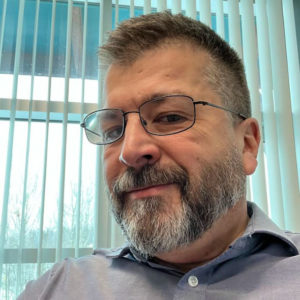
Michel Bouchard
WAU Committee member
WCAA Secretary
Michel Bouchard is a Professor, Department of Anthropology, University of Northern British Columbia in Canada. He served as President of the Canadian Anthropology Society/Société Canadienne d’Anthropologie (CASCA). He has researched ethnicity and nationalism, particularly in Eastern Europe and Russia. He has studied the history of French-speaking populations in Western North America in the 18th and 19th centuries. This past decade, he has studied Métis ethnogenesis and has published a number of books examining historical Métis communities. These include Bois-Brûlés: The Untold Story of the Métis of Western Québec. Vancouver: UBCPress, 2020. Co-authored with Sébastien Malette and Guillaume Marcottehttp://www.ubcpress.ca/bois-brules as well as the winner of the 2020 Prix du Canada Prize Les Bois-Brûlés de l’Outaouais. Une étude ethnoculturelle des Métis de la Gatineau. Québec: Les Presses de l’Université Laval. Co-authored with Sébastien Malette and Guillaume Marcotte. https://www.pulaval.com/produit/les-bois-brules-de-l-outaouais-etude-ethnoculturelle-et-juridique-des-metis-de-la-gatineau.
He is serving as WAU Secretary.